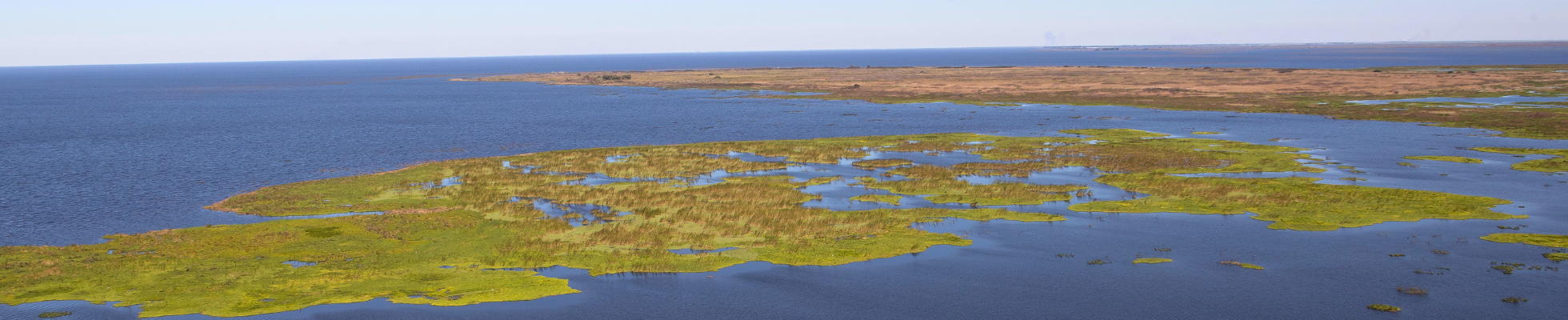
Florida’s Liquid Heart
At Florida Oceanographic Society, we believe that understanding the history of Lake Okeechobee is key to protecting Florida’s waterways today. Known as the “liquid heart of Florida,” Lake Okeechobee connects a vast network of rivers, wetlands, and estuaries — including the St. Lucie Estuary and the Indian River Lagoon, two ecosystems we work every day to protect.
The Lake Before Development
Long before cities, roads, and canals, Lake Okeechobee was surrounded by wetlands that acted like nature’s kidneys — slowly filtering and storing freshwater. Rainfall flowed south from the Kissimmee River, spreading across wide marshes before reaching the lake.
When the lake overflowed, water gently moved south into the Everglades, creating one of the most diverse and important ecosystems in the world. These natural flows supported fish, birds, and plants — and provided clean water for life downstream.
Learn more about the Kissimmee River Valley
When the Flow Was Changed
In the early 1900s, people began draining the land around Lake Okeechobee for farming and development. After devastating hurricanes in the 1920s, the government built the Herbert Hoover Dike — a massive levee system to hold back floodwaters and protect nearby communities.
To manage the lake’s water levels, engineers dug canals to the Caloosahatchee River to the west and the St. Lucie River to the east. These canals made it possible to control water movement, but they also disrupted Florida’s natural flow.
When the lake gets too high, freshwater discharges are released into the St. Lucie Estuary and Indian River Lagoon, carrying with them polluted runoff filled with nutrients that fuel harmful algal blooms.
Learn about harmful discharges and our advocacy efforts
The Modern Challenge
Today, Lake Okeechobee sits at the center of Florida’s water management system. The challenge is finding a balance — keeping communities safe from flooding while also protecting downstream ecosystems from harmful pollution.
Excess nutrients from agriculture, stormwater, and urban development enter the lake, contributing to poor water quality and algae growth. These blooms can harm fish, wildlife, and even human health when water is discharged to the coast.
Learn more about the algae problems facing Florida's ecosystems →
At Florida Oceanographic Society, we study how these discharges impact the Indian River Lagoon and advocate for science-based water management that prioritizes both safety and ecosystem health.
See how we’re working to protect our estuaries →
Restoring Balance
The good news? Restoration is happening. Through projects like LOSOM (Lake Okeechobee System Operating Manual) and Everglades restoration, Florida is working to send more clean water south — back to the places it naturally flowed.
These efforts will reduce harmful discharges to the St. Lucie and Caloosahatchee, restore wetlands, and bring life back to coastal waters. It’s a long journey, but one that’s vital for the future of our state.
Learn more about our advocacy for clean water →
Why It Matters
Healthy waterways are essential to Florida’s environment, economy, and way of life. Lake Okeechobee may be the heart, but every river, estuary, and coastline is part of the same living system.
At Florida Oceanographic Society, we’re working to restore that natural balance — through education, research, and advocacy that empower people like you to protect the water we all depend on.