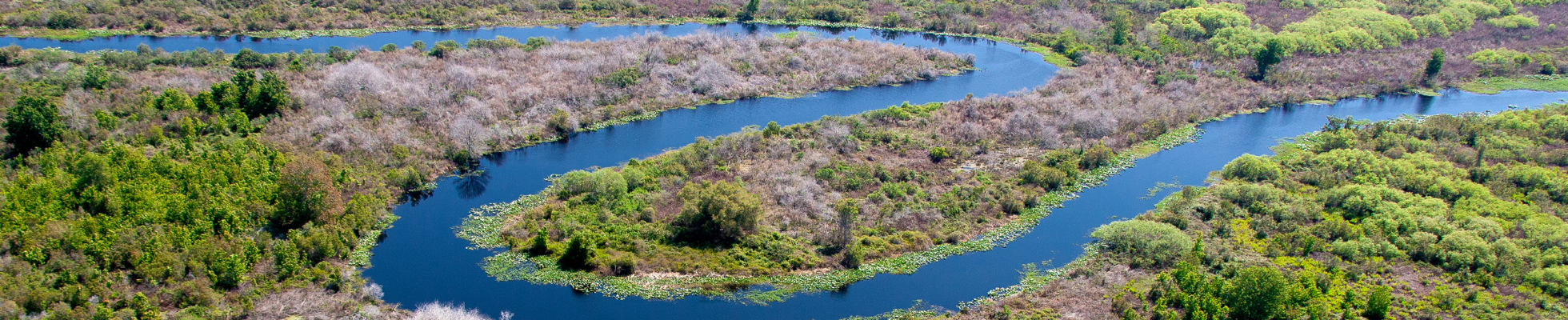
Restoring a River. Reviving an Ecosystem.
At Florida Oceanographic Society, we believe that protecting Florida’s waterways starts with understanding their history. One of the most important chapters in that story begins with the Kissimmee River Valley — a winding river system that connects Central Florida to Lake Okeechobee and the Indian River Lagoon.
A River Full of Life
Before people changed its course, the Kissimmee River stretched more than 100 miles through wide, grassy floodplains. During Florida’s rainy season, the river would overflow its banks and spread across miles of wetlands, creating a home for incredible wildlife.
This natural flooding supported fish, turtles, and countless birds like herons, egrets, and wood storks. The Kissimmee River floodplain was one of Florida’s most productive ecosystems — filtering water, reducing pollution, and providing food and shelter for animals that depended on it.
Learn more about Florida’s coastal ecosystems
When the River Was Straightened
In the 1960s, engineers channelized the Kissimmee River, turning its winding path into a straight canal to control flooding and support agriculture and development. While this project stopped seasonal floods, it also disrupted the natural balance of the ecosystem.
Wetlands dried up, fish and bird populations dropped, and water quality declined. The canal sent large amounts of freshwater straight into Lake Okeechobee, increasing the risk of harmful discharges into the St. Lucie Estuary and Indian River Lagoon — areas Florida Oceanographic Society works to protect today.
Learn how Lake Okeechobee affects our estuaries
A River Reborn
Recognizing the damage caused by channelization, scientists and environmental groups worked together to restore the river’s natural flow. The Kissimmee River Restoration Project, led by the South Florida Water Management District and the U.S. Army Corps of Engineers, began removing parts of the canal and reconnecting the river to its floodplain.
This massive project — one of the largest river restoration efforts in the world — has already restored more than 40 square miles of wetlands. Fish and wading birds are returning, and water quality has improved. The Kissimmee River is coming back to life.
Explore our water restoration and research efforts
Why It Matters
The Kissimmee River feeds into Lake Okeechobee, which in turn affects the Indian River Lagoon and Caloosahatchee Estuary. When the river’s natural flow is restored, the entire system benefits — from inland wetlands to coastal seagrass meadows.
Healthy rivers mean cleaner water, stronger ecosystems, and more resilient coastal environments. That’s why Florida Oceanographic Society continues to support science-based water management and restoration projects across Florida.
Together, we can protect the waterways that connect us all.